Long before crystal balls, tarot cards, and fortune tellers at fairs and festivals, people were trying to answer one of humanity's oldest questions:
What does the future hold?
Will the harvest be good? Will a journey be safe? Will a marriage succeed? Will a war be won? Will love come our way?
For thousands of years, people from different parts of the world have searched for signs, patterns, messages, and clues about what lies ahead.
Some looked to the stars. Others studied dreams, the flight of birds, the movement of water, or the markings on objects. Some traveled great distances to consult oracles. Others turned to cards, tea leaves, palms, and other methods that became part of everyday culture.
Fortune telling has a long and surprisingly varied history. It tells us as much about human nature as it does about the traditions themselves.
It Started Long Before Tarot Cards
Some of the earliest documented forms of divination appeared in ancient Mesopotamia, where priests and specialists studied signs they believed offered information about the intentions of the gods.
They examined the movements of planets and stars, interpreted unusual events, and even studied the appearance of animal organs, particularly the liver, to look for omens.
This practice, known as hepatoscopy, may sound unusual to us today, but it was taken seriously in the ancient world.
People believed that the natural world contained messages worth interpreting. A strange occurrence wasn't necessarily random. It might carry meaning.
Ancient Babylonians also developed elaborate systems of astrology. They recorded celestial movements and connected them with events on Earth.
The desire to understand the heavens and what they might reveal about human affairs would influence cultures for centuries.
The Greeks Had Oracles
Ancient Greece gave us one of the most famous traditions of seeking answers about the future: the oracle.
Perhaps the best known was the Oracle of Delphi.
People traveled from across the Greek world to seek guidance from Apollo's priestess, known as the Pythia. Her pronouncements were considered sacred and were often delivered in language that required interpretation.
Kings, military leaders, and ordinary citizens all sought answers.
But there was an interesting complication.
Oracle responses weren't always straightforward. They could be mysterious, symbolic, or open to more than one interpretation.
One famous story concerns King Croesus of Lydia, who consulted the Oracle of Delphi before going to war against Persia. He was told that if he crossed the river Halys, he would destroy a great empire.
He assumed the prophecy meant his enemy's empire.
Unfortunately for Croesus, the empire he destroyed was his own.
Whether every detail of the story is historically accurate or not, it illustrates something that has followed fortune telling throughout history: people often hear what they hope to hear.
The Stars Have Been Telling Stories for Thousands of Years
Astrology is among the oldest continuing traditions associated with predicting human affairs.
Ancient civilizations watched the skies closely. The movements of the Sun, Moon, planets, and stars helped people track seasons, organize calendars, and understand agricultural cycles.
Over time, some cultures developed systems that connected celestial movements with earthly events and individual lives.
Babylonian astrology influenced later Greek and Roman traditions. The Greeks developed the twelve-sign zodiac system that remains familiar today.
The Romans also consulted astrologers, although their relationship with astrology was complicated. At different times, emperors welcomed astrologers, restricted them, or expelled them from Rome.
Even people who dismissed astrology could be fascinated by it.
The stars have always offered something humans find difficult to resist: a sense that our individual lives may be connected to something much larger.
China Developed Its Own Ancient Systems of Divination
Fortune telling wasn't limited to the Mediterranean and Middle East.
In ancient China, divination developed through several traditions, including oracle bones.
During the Shang dynasty, dating roughly from 1600 to 1046 BCE, rulers and diviners used heated bones and turtle shells. The resulting cracks were interpreted as answers to questions about warfare, harvests, weather, and other important matters.
Another influential tradition was the I Ching, or Book of Changes.
Its origins reach back into ancient Chinese history, and it developed into a system of interpreting patterns and changing circumstances through hexagrams.
Rather than simply asking what would happen tomorrow, the I Ching offered a way to consider changing conditions, relationships, and possible outcomes.
Its influence extended well beyond divination into Chinese philosophy and thought.
The Middle Ages: Fortune Telling, Religion, and Superstition
During medieval Europe, attitudes toward fortune telling were complicated.
Christian religious authorities often condemned attempts to predict the future through supernatural or magical means. Yet astrology, dream interpretation, and other forms of divination continued to attract interest.
Astrology was also studied in scholarly settings and used in medicine, calendars, and the timing of important decisions.
Not everyone who interpreted signs was considered a fortune teller. Some were scholars, physicians, astronomers, or religious figures.
At the same time, village traditions continued. People sought answers about love, marriage, lost objects, illness, and family matters.
The desire to know what might happen next didn't disappear simply because authorities disapproved.
The Unexpected History of Tarot Cards
Here's a historical fact that surprises many people.
Tarot cards weren't originally created for fortune telling.
The earliest known tarot decks appeared in fifteenth-century Italy, where they were used to play a card game called tarocchi.
These were beautifully illustrated cards, often commissioned by wealthy families. They included familiar figures such as the Emperor, the Empress, the Fool, and the Wheel of Fortune.
It wasn't until the late eighteenth century that tarot became associated with fortune telling.
French writers and occult enthusiasts began assigning deeper mystical meanings to the cards. Some even claimed that tarot preserved ancient Egyptian wisdom, although historians have found no reliable evidence for that origin story.
During the nineteenth century, tarot became increasingly connected with occult philosophy, symbolism, and divination.
Then came one of the most influential decks in modern tarot history.
The Rider-Waite-Smith deck, first published in 1909, featured artwork by Pamela Colman Smith and was developed in collaboration with Arthur Edward Waite.
Its illustrated cards helped make tarot imagery more accessible and recognizable. Many modern tarot decks still draw inspiration from its designs.
A card game had evolved into one of the world's best-known forms of divination.
The Parlour Fortune Teller
By the nineteenth century, fortune telling had become part of popular entertainment in many parts of Europe and America.
People encountered fortune tellers at fairs, carnivals, traveling shows, and social gatherings.
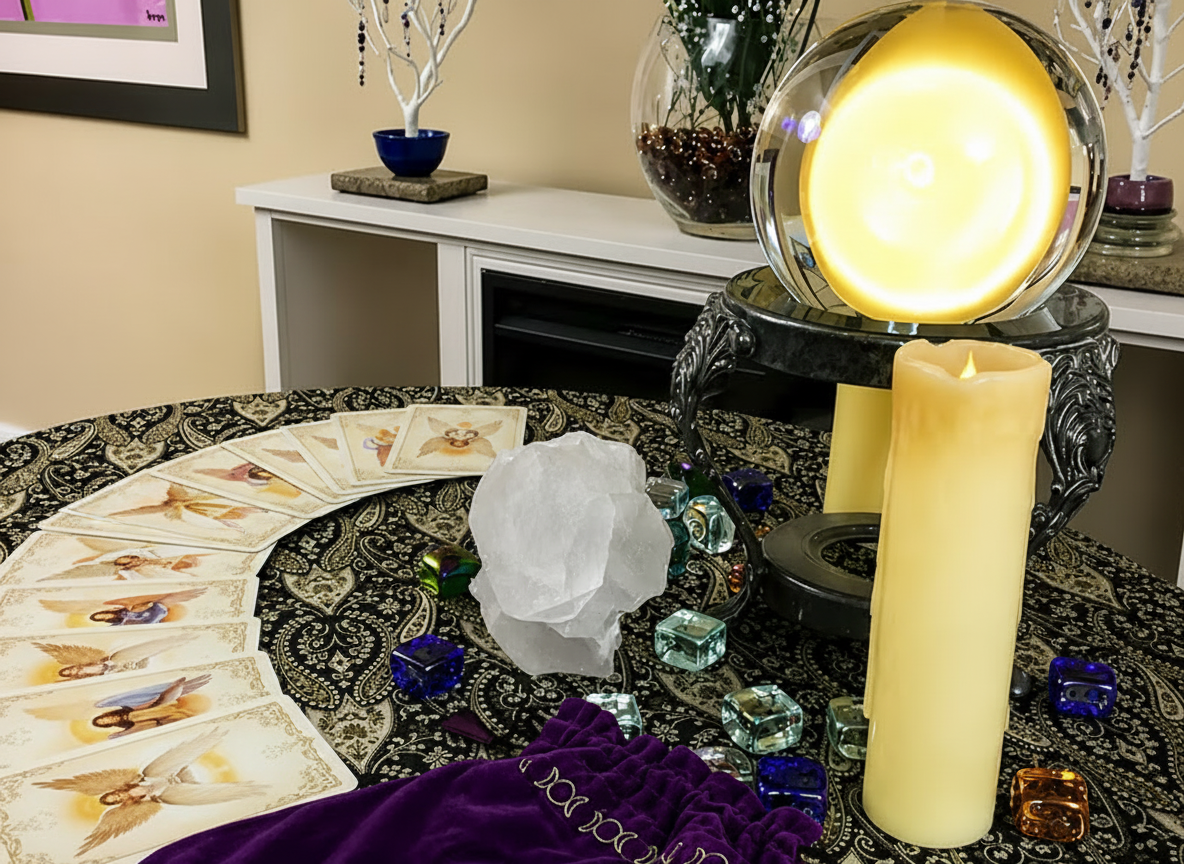
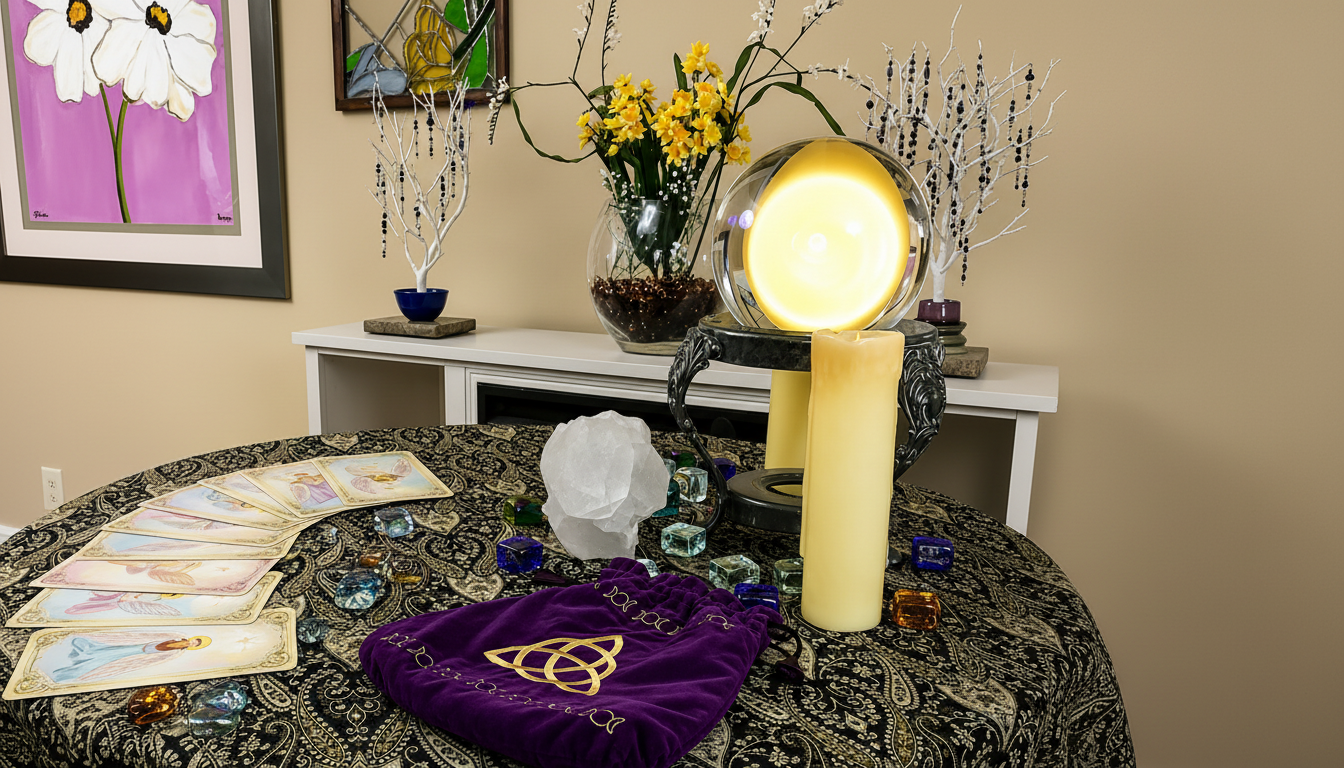
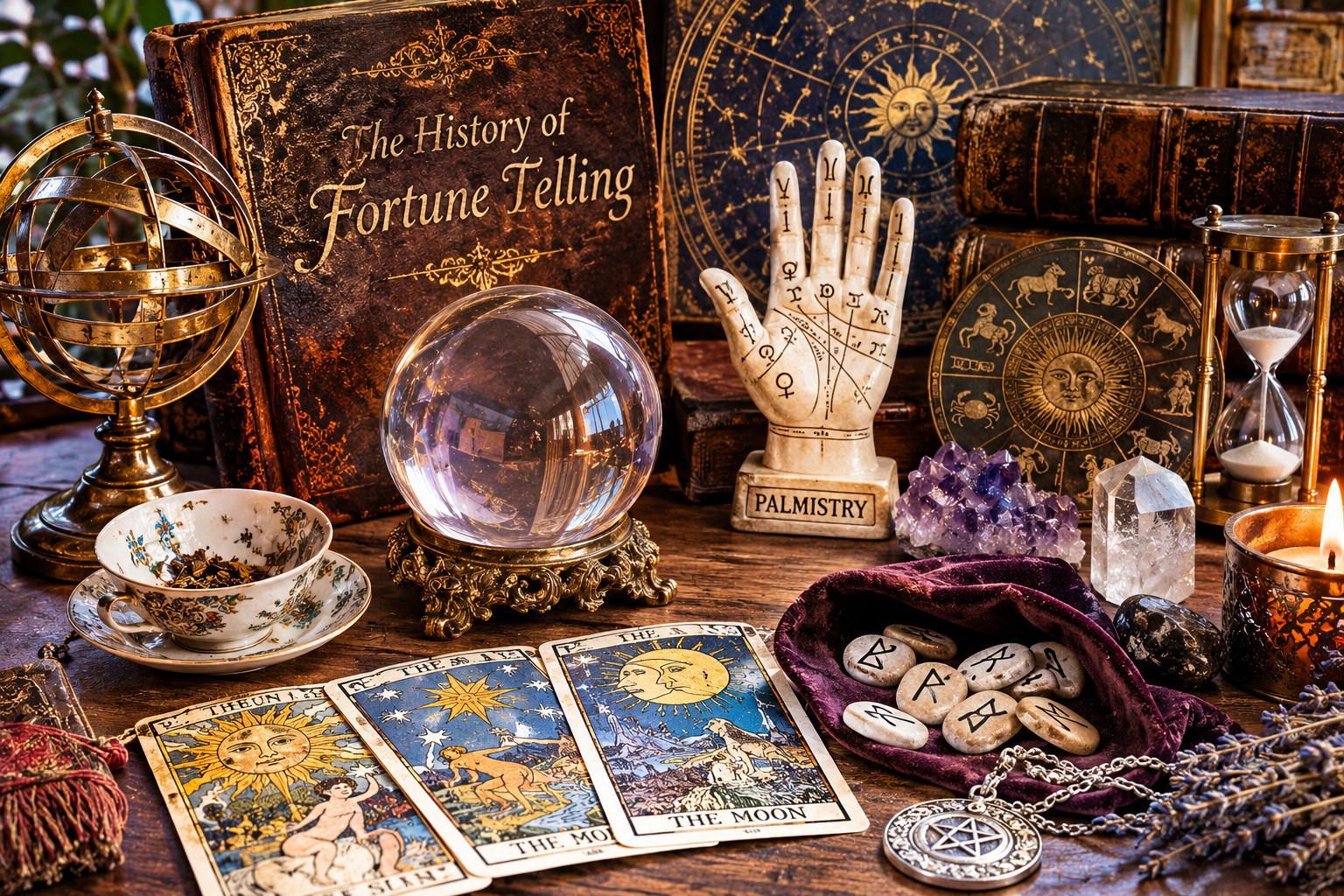
Some readers used cards. Others practiced palmistry, interpreted tea leaves, or used crystal balls.
The Victorian era was particularly interested in spiritualism, séances, mediumship, and communication with the unseen.
For some people, these activities represented serious spiritual beliefs. For others, they were entertainment, curiosity, or a way to participate in fashionable social activities.
The fortune teller became a familiar figure in popular culture.
A small table, a deck of cards, a mysterious atmosphere, and the promise of discovering something unexpected were enough to attract a crowd.
And that basic appeal hasn't disappeared.
Why Have We Always Wanted to Know the Future?
This may be the most interesting question of all.
Why have people across so many cultures and centuries developed ways to interpret signs and seek answers about what lies ahead?
Part of the answer is uncertainty.
Human beings don't particularly enjoy not knowing what comes next.
We want reassurance when we're worried. We want direction when we're confused. We want hope when we're facing change.
Questions about love, family, work, money, health, and our future have always been part of the human experience.
Fortune telling offers a way to engage with those questions.
It can provide a sense of ritual, a moment to reflect, or an opportunity to consider possibilities that might otherwise go unexplored.
Of course, historical popularity isn't proof that any particular method can reliably predict the future. Different traditions have different beliefs, histories, and interpretations.
But their continued presence tells us something important about people.
We are curious creatures. We look for patterns. We search for meaning. And we are fascinated by the possibility that there is more to a situation than what we can immediately see.
A Tradition That Continues to Evolve
Today, fortune telling looks very different from what it did hundreds or thousands of years ago.
Tarot readings are available online. Astrology has a presence on social media. Palmistry, tea-leaf reading, and other traditions continue to attract interest.
Some people approach these practices spiritually. Others enjoy them as entertainment. Some simply find the symbolism and history fascinating.
The tools have changed, but the curiosity remains.
Perhaps that's why fortune telling has survived for so long.
Every generation has its own questions about the future, and every generation finds new ways to ask them.
From ancient temples and royal courts to Victorian parlours and modern gatherings, the search for answers has been a remarkably persistent part of human history.
We may never know everything the future holds. But our fascination with what lies ahead seems to be one tradition that isn't going away.